
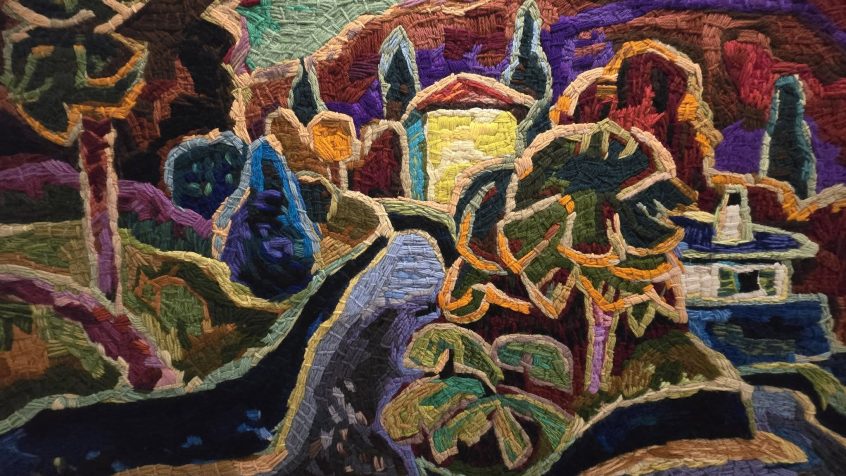
Today we visited the Brücke Museum, which had come highly recommended by one of Matt’s colleagues. It is devoted to the German Expressionist group Die Brücke. Nestled in a wooded area near Grunewald, the museum is pleasant enough, light-filled and modern. But the visit was disappointing. The current exhibition is about the handcrafts of this art movement, including metal, wood, fabric and glass. It was small and not very interesting. We moved through the galleries quickly and left.
On a whim we headed to the Futurium, a museum neither Matt nor Asher had even heard of. I became intrigued by museums of the future after visiting the spectacular and highly theatrical Museum of the Future in Dubai. Berlin’s version could not be more different.
Where Dubai’s museum is sleek, cinematic, and technology obsessed, the Futurium is quieter, more thoughtful, and deeply focused on sustainability. It is also highly interactive. Much of the museum explores how humans might live in greater harmony with the planet, through urban farming, renewable energy, alternative housing, reduced consumption, and smarter use of resources.
Visitors are invited to imagine future cities, experiment with environmental solutions, and think about how everyday choices shape the world ahead.
Most importantly, it was fun. We all enthusiastically pushed buttons, explored displays, and engaged with hands on installations. The only disappointment was that by the time we arrived at the area featuring hands-on 3D printing and laser paper cutting, those exhibits had closed for the day.
The Futurium managed something difficult, it was intellectually serious without feeling preachy or grim. Instead of presenting the future as either utopia or catastrophe, it encouraged curiosity and possibility.
In a city filled with museums about the past, Berlin’s Futurium offered a refreshing reminder that museums can also help us imagine what comes next.